AI Skills · PRACTICAL GUIDE
Keep your own ideas and voice when writing with AI
Develop an original starting point, compare AI suggestions, verify supporting claims, and edit a piece you can explain.
Watch the original tutorial
Open the original video on YouTube ↗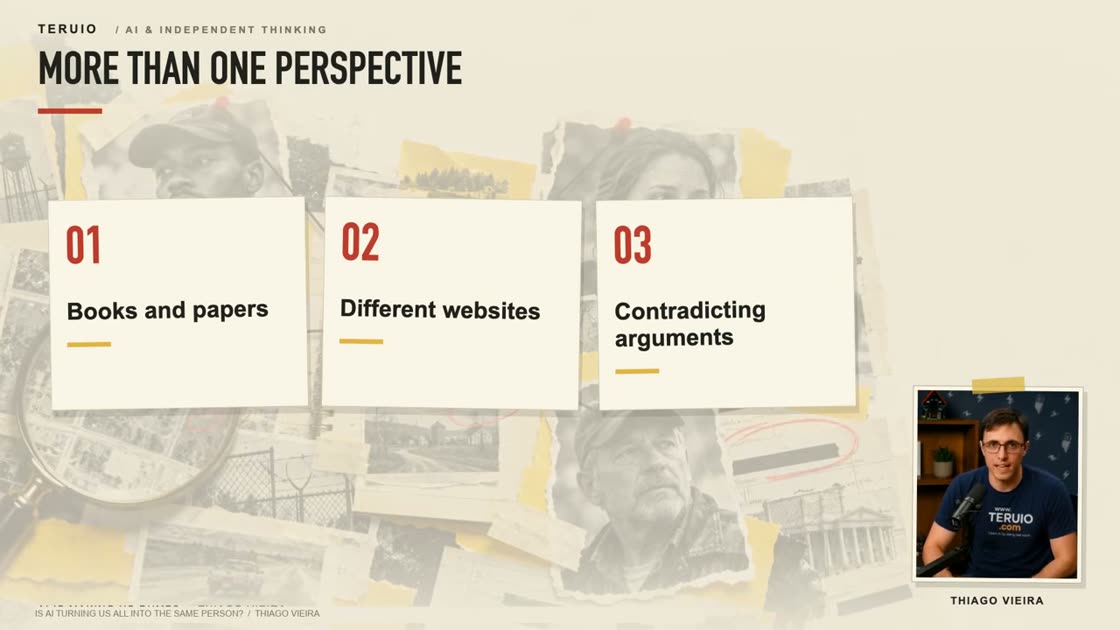
Thiago’s reflection asks whether polished AI output can hide an absent opinion. This exercise focuses on creating a first idea yourself, exploring alternatives, and choosing language you can defend.
What you’ll learn
Develop an original starting point, compare AI suggestions, verify supporting claims, and edit a piece you can explain.
Before you start
Bring a paragraph you wrote yourself and one observation only you could have made. Underline the sentence that carries your opinion.
1. Write your own starting point
Before opening the chat, write the point you want to make, the audience, and one example from your own experience. Keep the rough wording. It gives you something concrete to compare with a generated version rather than accepting the first fluent suggestion.
2. Ask for a different direction
Supply your draft and ask: “Identify my main claim, challenge its weakest assumption, and suggest two genuinely different ways to develop it. Preserve my facts and distinguish suggestions from evidence.” Read the alternatives before asking for a rewrite. Choose an approach because it fits your meaning.
3. Read beyond the summary
When a suggestion depends on a fact, open the underlying source. Read the relevant argument and its limitations. Compare firsthand experience with other evidence instead of treating a polished paragraph as research.
4. Edit and explain the result
Remove generic phrases you would not use. Restore useful details from your first draft. Close the chat and explain the argument aloud, including its limitation. If you cannot explain a claim, investigate or remove it. Save a short note about which changes improved the piece.
Practice exercise — Test whether the rewrite still sounds like you
Try this practice sentence: “Our Friday handoff broke because both teams thought the other one owned the checklist.” Ask for two competing explanations. Then write your own next sentence using something you observed. If the rewrite changes “both teams thought” to “neither team cared,” it has added a motive you cannot establish. Keep the observation and discard the invented explanation.
Check your result
Close the chat and explain why you chose your interpretation. If you can only repeat the generated phrasing, go back to your notes and find the detail that persuaded you.