ChatGPT · PRACTICAL GUIDE
Find audience problems in Reddit discussions with ChatGPT
Organize relevant public discussions into evidence-backed themes, distinguish opinions from facts, and turn patterns into useful content ideas.
Watch the original tutorial
Open the original video on YouTube ↗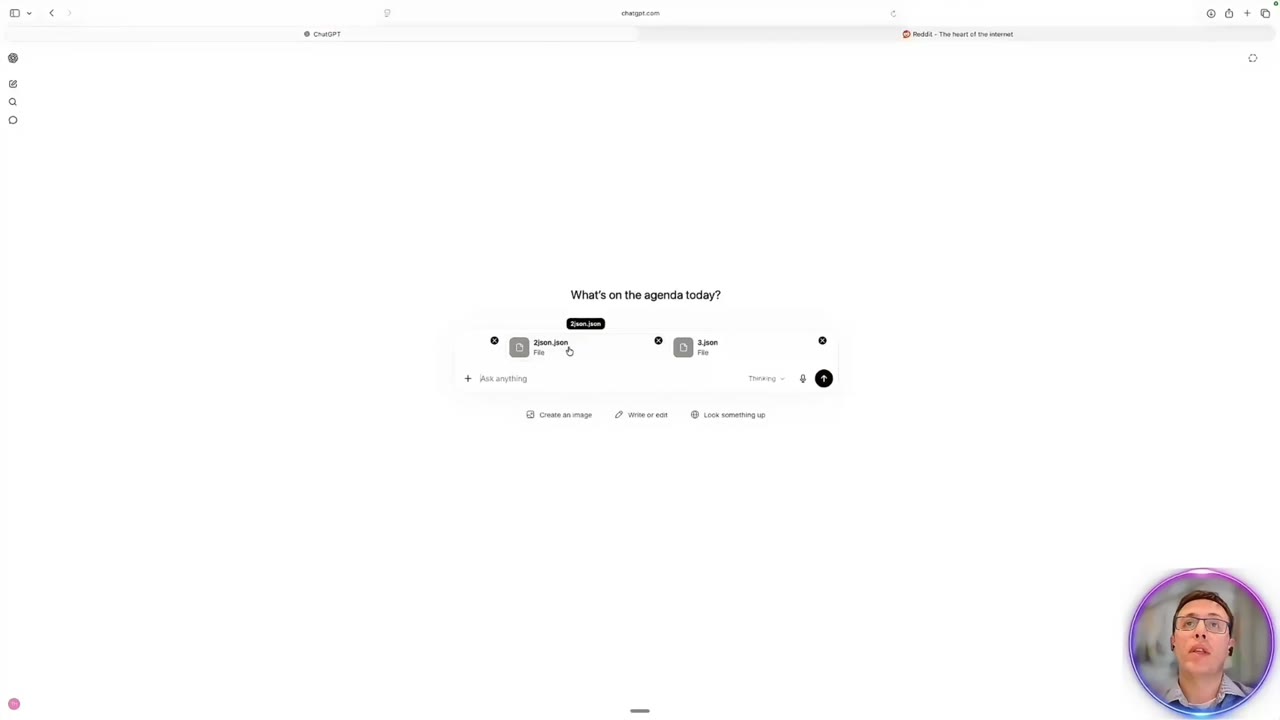
Before building a lesson, it helps to know which problems people actually describe. Thiago’s video uses public Reddit discussions about AI at work, then asks ChatGPT to identify recurring pain points, complaints, and workflows. The method produces research leads, not a representative survey.
What you’ll learn
- Choose discussions that match a specific audience question.
- Keep the source of each observation traceable.
- Ask for themes without inventing quotes or statistics.
- Turn a finding into a useful lesson you can test.
Before you start
Choose one narrow question, such as “Where do office workers get stuck when using AI for weekly reports?” Decide which communities and search terms are likely to surface relevant experiences.
The video demonstrates saving a thread through a URL ending in .json. That method may be unavailable or restricted. Use material you can legitimately access and save, or collect short relevant excerpts with their links manually. Do not work around access restrictions. You can practice with a handful of discussions before expanding the collection.
1. Select a varied sample
Search for the problem, not only the product name. A discussion about missed follow-ups may reveal more about a workflow than a list of favorite AI tools.
Thiago looks at votes and comment counts to locate active discussions. Those are discovery signals, not proof that the participants represent your whole audience. Include more than one community and look for contrasting experiences. Avoid selecting only threads that support the lesson you already want to make.
2. Keep a source register
For each discussion, record its URL, title, capture date, community, and why it belongs in the sample. Assign a short source label that you can reuse in the analysis. Remove unnecessary usernames and personal details from working excerpts.
If you save structured files, check that they contain the intended comments rather than an error page or unrelated page data. A file upload succeeding does not prove that its contents are useful. Tell ChatGPT how many files or excerpts you supplied and ask it to report anything unreadable.
3. Ask for themes with evidence
The demonstration requests ten pain points, three major complaints, and specific workflows. This adapted version adds traceability:
Analyze the supplied discussions about [question]. Identify up to ten recurring pain points, the three clearest complaint themes, and any concrete workflows people describe. For each finding, name the supporting source labels and provide a brief paraphrase. Distinguish firsthand reports, opinions, and your inference. Preserve disagreements. Do not invent quotes, counts, or missing context. State the sample’s limitations.
“Up to” matters. A small collection may support fewer than ten useful themes. Ask for fewer findings rather than padding the output with variations of the same complaint.
4. Verify the strongest patterns
Open the original discussion behind each promising theme. Check whether the comment was serious, whether a reply corrected it, and whether the reported issue has a specific context. A frustrated comment can reveal a problem worth investigating without establishing its cause.
If you want to count occurrences, define the unit first. Ten comments in one thread are different from ten independent threads. Duplicated posts and repeated replies should not inflate a claim about how widespread a problem is.
5. Turn one finding into a lesson
Choose a problem you can actually demonstrate solving. Write a sentence connecting the evidence to the lesson: “Several sampled discussions describe difficulty checking AI summaries, so this lesson will show how to compare a summary with its source.”
Create a small walkthrough and test whether someone with that problem can follow it. Ask for feedback about the task, not just whether they liked the video. Keep the research notes so future revisions can distinguish what the discussions said from what you inferred.
Common questions
Is Reddit more reliable than other sources?
Not automatically. Public discussions can include promotion, jokes, exaggeration, and mistaken advice. Compare them with other evidence and verify factual claims separately.
Can I publish a strong statistic from these files?
A convenience sample does not establish population-wide percentages. Describe the observed sample accurately and avoid turning a few discussions into a claim about all workers.
Use the five thinking habits when evaluating the findings and deciding what deserves a tutorial.


