AI Skills · PRACTICAL GUIDE
Choose a practical AI skill and build a small project
Turn six AI skill ideas into manageable exercises, choose a useful project, and evaluate what you learned from the result.
Watch the original tutorial
Open the original video on YouTube ↗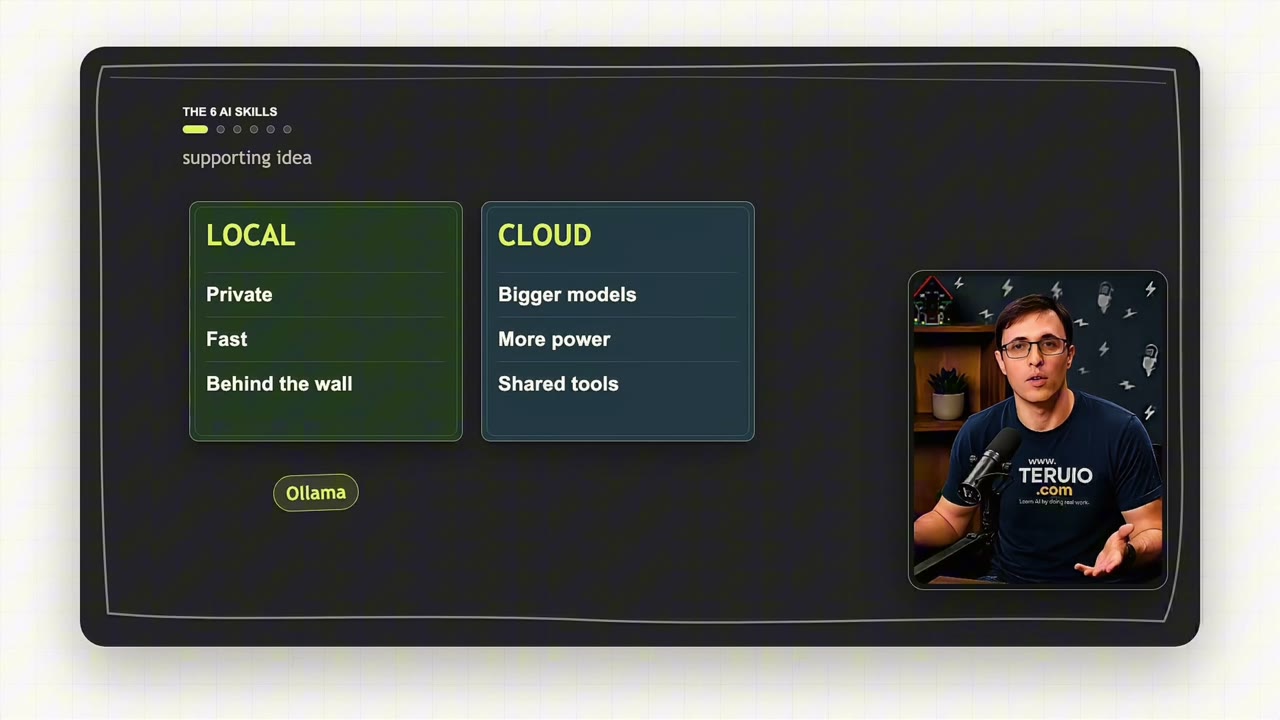
“Learn AI” is too broad to guide a weekend’s work. Thiago’s video suggests six directions: running agents, understanding distribution, exploring hardware, curating information, building and sharing a product, and bringing people together. This guide turns those ideas into small exercises with observable results.
What you’ll learn
- Choose a skill based on a real task you care about.
- Define a small output and a way to assess it.
- Record failures as useful feedback.
- Combine a technical skill with research or communication.
1. Build a briefing you can verify
The agent example is a daily briefing based on a calendar, notes, and saved links. Start with a small set of information you are authorized to use. Define the output: today’s commitments, waiting decisions, and follow-ups, each with a source.
Write down which actions are allowed. For the first exercise, preparing a briefing is enough; sending messages or changing a calendar can remain outside its scope. Compare the result with the source records. Count missed commitments and incorrect statements, and record how long review took.
You can begin manually by supplying the sources to an approved AI tool. Automation becomes useful after the briefing is reliable. The video mentions local models as another learning direction, but this exercise does not require installing one.
2. Research where your audience pays attention
Distribution begins with understanding who has the problem. Pick a specific audience and list places where they discuss their work: communities, newsletters, events, and search questions. Write one sentence in the language they use to describe the frustration.
Use the audience research guide to examine public discussions. Treat the resulting sentence as a hypothesis to test, not proof of demand. Create one useful explanation and notice which questions remain afterward.
3. Explore a physical system
The video proposes a simple robotics experiment and documenting failures such as poor lighting or a slipping grip. The transferable lesson is to connect an input, a decision, and an action, then observe what breaks.
You do not need to buy hardware immediately. Start with a simulation, an existing educational kit, or a written test plan for one harmless task. Define success before trying it. Record conditions as well as outcomes: changing the camera angle can matter as much as changing the software.
Avoid treating the video’s example budget as a current shopping recommendation. Choose equipment only after checking what the task needs and what you already have.
4. Curate with a clear explanation
Choose one narrow topic you can follow for a week. For each update, write what happened, why it matters to your audience, what you think it changes, and one action worth considering.
Keep facts separate from your interpretation. Link to the original announcement and identify anything you have not tested. A useful curator does more than repeat a headline, but an opinion still needs evidence. At the end of the week, compare which explanations helped people ask better questions.
5. Build and share one small solution
Pick a problem you understand personally: a recurring calculation, an intake form, or a checklist. Define the smallest usable output and test it with sample information.
Prepare a short demonstration that shows the task and result. Share it through an appropriate channel with people who have the problem. Watch where they hesitate, then change the product or instructions. The exercise is complete when you have learned from use, not merely when a prototype exists.
6. Organize a useful conversation
The final idea is a small gathering around one question, such as what people are automating at work. Invite a manageable group, explain the purpose, and make room for differing experience levels.
Afterward, prepare a concise recap with useful ideas and agreed follow-ups. Ask before attributing personal remarks. The value comes from continued trust and useful exchanges, not the size of the invitation list.
Choose your first experiment
Write three lines: the task, the output you will produce, and the evidence that will show whether it helped. Choose one exercise you can finish with your current tools. Keep a short log of what worked, what failed, and what you would change next time.
These are learning projects, not guarantees about future salaries or job security. The practical goal is to become better at one task and to explain what improved.